
exclusive article for website readersThe Future We Were Already Living
On grief, certainty, and becoming the architect of the life you never expected to live.
Long before tomorrow arrives, we have already taken up residence there, already begun inhabiting it. We fully furnish it with expectations into rooms we have never entered. We imagine careers unfolding, children growing older, anniversaries yet to celebrate, conversations we’ll someday have, places we’ll someday visit. Without realizing it, we rehearse a life that hasn’t happened yet.
It is one of the quiet miracles of being human.
Every decision we make assumes there will be another ordinary Tuesday waiting for us, until there isn’t.
You can say I’ve found that out through life experience.
Sometimes history doesn’t slowly unfold, Sometimes it explodes and shatters everything in its path. When it does, the blast radius reaches far beyond the moment itself, It has the capacity to destroy futures.
After surviving the accident, people understandably focused on what they could see. I was able to relearn basic functioning, but would I make a “full recovery”? No one asked about the invisible demolition happening somewhere much deeper.
No one asked about the life I was no longer going to live. The abilities that had quietly vanished. The assumptions that had evaporated.
The woman who had unknowingly walked into the morning believing tomorrow belonged to her.
When trauma arrives, it doesn’t simply interrupt your story. It edits chapters that haven’t even been written. Psychologists refer to this as the loss of an “assumptive world.”
Each of us carries an internal map of how life works. We quietly believe that good things happen to good people. Generally speaking, there’s understood norms like the body heals, hard work pays off, and tomorrow will probably resemble yesterday. We rarely notice these assumptions because they operate like gravity—silent, dependable, invisible. Until they don’t.
Trauma doesn’t simply injure the body, it fractures certainty, one of the greatest invisible luxuries we never realize we’re carrying.
The strange thing about surviving a catastrophe is that everyone celebrates your survival, as they should. That is often mistaken for restoration.
People assume the hardest part is making it through the event. For many survivors, that is only the introduction. The real work begins after everyone believes the crisis has ended.
Because now you have to build a life inside a landscape you never intended to inhabit.
You are handed blueprints for a house that no longer exists. Every room was designed for a person who is no longer capable of living there. So eventually you start sketching a new plan.
I used to think resilience in this situation meant returning. Returning to who I was, returning to normal. that assumes the destination still exists. Sometimes recovery isn’t a road leading backward. Sometimes the bridge behind you has collapsed and you’re tasked with building a new one without anyone knowing it. This is what I wish more people understood about life-altering trauma. Healing is not reconstruction, it is full-on architecture.
You are not repairing an old building, you’re redesigning one with materials you never wanted to use: grief, patience, adaptation, humility, dependence, perspective.
The strange tenderness that only arrives after everything rigid has been broken open raw. Brick by reluctant brick, a different life begins to emerge, not because you wanted it, only when you stop trying to resurrect the impossible.
I realized something unexpected, the future that did happen had never existed before. It wasn’t waiting somewhere for me to discover it. It was being created every time I chose to keep showing up and trying again.
Every difficult therapy appointment, every forgotten detail, every moment of laughter that somehow enveloped me despite everything. Every ordinary day that proved joy was still capable of finding altered lives.
Perhaps that is the quiet invitation hidden inside catastrophe. Not to become who you were. Not even to become someone better, but to be real. Be someone who knows life is astonishingly fragile. Someone who no longer mistakes certainty for security. Someone who understands that identity isn’t what remains untouched by suffering. Identity is what keeps growing around it.
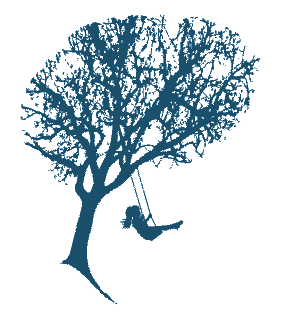
Like a tree that incorporates the scar of an old lightning strike into the grain of its trunk, the wound never disappears, but neither does the life surrounding it.
If you’ve experienced a before and an after, you probably know exactly what I’m talking about.
Maybe your dividing line wasn’t a brain injury, of course the details are different, but the geography is the same. There is always a version of you that never gets to exist. There is always another version quietly waiting to be introduced.
I no longer spend much time wondering who I would have become if none of this ever happened. That woman belongs to a future that no longer exists. Instead, I have become curious about someone else. The woman I am still becoming because it did. Those are two very different questions. One is haunted by absence, the other is animated by possibility.
And while I would give almost anything to erase the tragedy that changed my life, I no longer believe my life ended there, It divided there.
The future I imagined was taken from me.
But another future—one I never would have chosen, one I never could have predicted—quietly began asking to be lived.
This is what it means to be human. We spend our lives building futures we cannot guarantee, and when those futures disappear we can discover something astonishing, that we are capable of imagining another. Life asks us the same question over and over, “Now, with this landscape who will you become here?”
Sometimes history doesn’t slowly unfold.
Sometimes it explodes and shatters everything in its path.
I publish regularly on Substack, where I make sense of life after brain injury in real time—telling the truth about what “recovery” actually looks like, how grief, healing, motherhood, and identity rearrange themselves after survival.
I invite you to join me there.